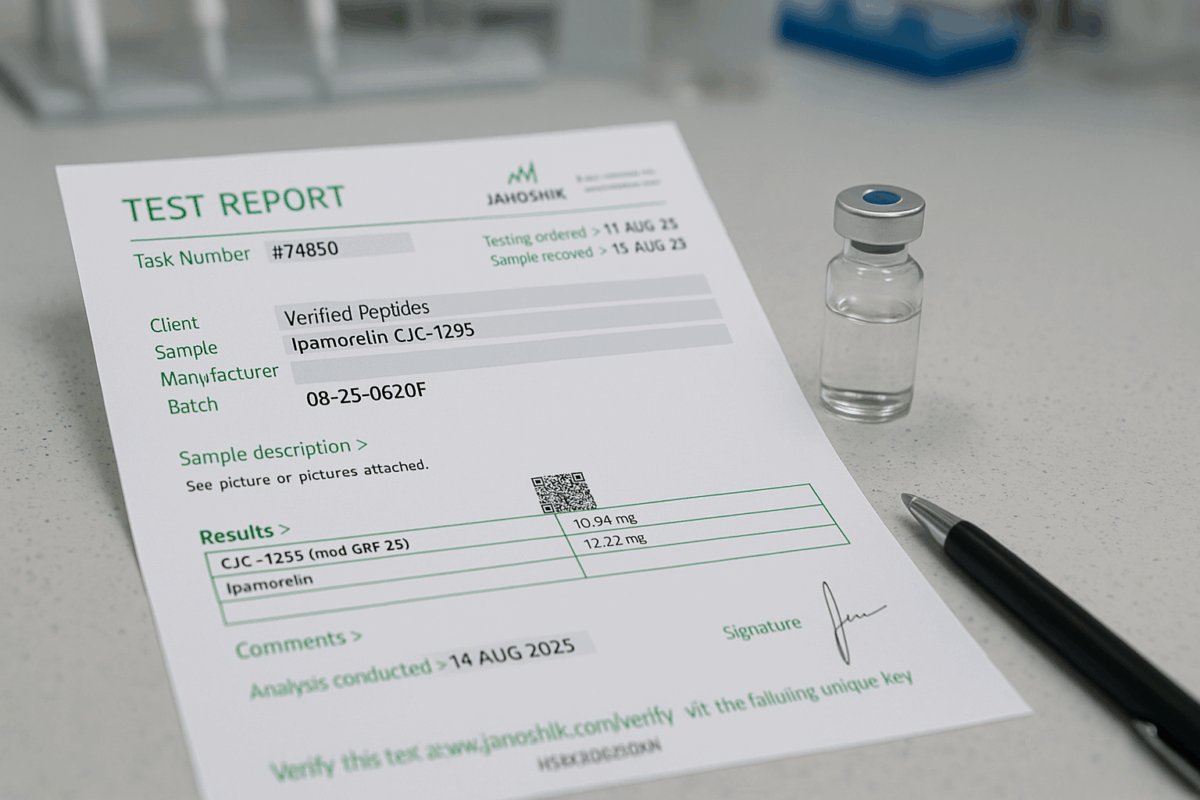
Peptide Top Quality: Significance Of Third-party Recognition Innovative Proteomics supplies peptide pureness evaluation utilizing analytical reversed-phase HPLC integrated with mass spectrometry. They offer MALDI-TOF MS and other mass spectrometry alternatives regularly. Mass spectrometry (MS) validates peptide identity by measuring molecular weight. The technique identifies the specific mass of the peptide, which acts as a molecular finger print. If the measured mass matches the expected mass for your peptide sequence, you have verification that the correct compound exists. And the only way to know what you're actually getting is via appropriate analytical screening. For study entailing any type of organic system (cell society, in vivo pet designs), endotoxin data is very relevant and its absence View website should be dealt with as an incomplete COA. Third-party testing laboratories of note in the peptide research supply chain consist of certified analytical chemistry solutions that operate under ISO or comparable top quality administration structures. A COA recognizing the screening research laboratory by name, and for which the screening laboratory's certification can be independently verified, brings substantially a lot more evidentiary weight than a confidential inner COA. A lot of peptide providers and research laboratories count on numerous reputable logical techniques. High pureness is preferable because even tiny impurities might disrupt experimental outcomes or interpretations.
Verified Peptide Logical Workflows
Is 95% pureness helpful for peptides?
Peptides with an 85% pureness degree or better are typically made use of in enzyme assays or organic task studies. Peptides with pureness greater than 95% are excellent for quantitative evaluation.

What Is Peptide Pureness Testing?
When evaluating a COA, scientists should try to find the complying with details. A strong peptide screening workflow utilizes techniques that respond to corresponding concerns. The table below is the functional method to think of typical tests when reviewing a peptide COA. Verifies the exact molecular weight and verifies the peptide's identity. At Maxed Out Compounds, every item we provide includes a clear testing record and transparent paperwork. Our mission is to sustain scientists with high-purity, validated compounds that meet the demands of modern clinical research study-- nothing even more, absolutely nothing less.- Mass spectrometry determines the molecular weight of a compound with extreme accuracy.Before a peptide is used in a study atmosphere, researchers usually evaluate screening documentation to better recognize item identity, purity specifications, and general top quality standards.Commercial intent for peptides often brings about a market saturated with resellers that might not confirm the stability of their stock during transportation.This has actually been implemented by the capacity to synthesize peptides to high purity and in huge scale.In case I do not see you, excellent afternoon, good evening, and good evening.Physical attributes and peptide structure can influence dissolution habits individually of pureness.